Starting a Hand Painted Miniatures Business (With Zero Artistic Skill)
For Christmas 2024 we bought a resin printer for the family. We had decided to play Pathfinder 2e and my wife really wanted miniatures on the board. This was far more important to her than it was to me originally.
What I didn’t realize at the time was that this decision would eventually turn into a hand painted miniatures business, despite one major problem. I am not an artist.
I visualize a finished product slightly worse than an unplugged monitor. I do not understand color theory. And I generally believe I have zero artistic ability. What I do have is an MBA, the ability to research, and a willingness to fail until I succeed. That combination turned out to matter more than I expected.
Starting With Zero Artistic Skill
Because I lacked any real artistic foundation, I started studying techniques and painting styles that would let me compensate for it.
What is slap chop in all its versions?
What is zenithal highlighting?
What is the difference between a layer paint, a contrast paint, and a speed paint?
Why do my resin miniatures hate me if I don’t prime them first?
Do I prime in white, black, or grey?
Why is it that when I watch someone prime in pink and then add yellow, they get orange?
And why is it that every time I use an airbrush I want to slam my head into a desk?
I spent many nights just watching other people paint while I figured out how I was going to approach my first miniature. In true fashion for me, that first “miniature” was an eight-inch-tall demon hunter.
Finding the Right Artist and Models
Later, as we looked through STL files, we ended up falling in love with one artist in particular. His miniatures printed cleanly, looked great, and were genuinely enjoyable to paint.
That’s how this business really began.
We didn’t want to start a business. We wanted to paint miniatures for our family game nights. In doing so, we found an amazing artist, fell in love with his models, and over time started to think, “I think others would like these as well.”
Setting Realistic Expectations From Day One
From the beginning we kept our expectations realistic. We knew we were working with a niche product in a market heavily influenced by shrinking entertainment budgets.
Building this business was never going to be an overnight success.
We assumed from day one that we were looking at a two to three year build, and every decision we have made since then has been made with that timeline in mind.
My First Fire Elemental and a Very Rough Start
If you need proof of my lack of artistic ability, here is one of my first fire elementals.
I grabbed a picture of a candle flame and painted it.
Remember, my ability to visualize a finished product is about as effective as an unplugged monitor.
Where This All Leads
This was the beginning of Storytellers Haven. What started as a way to make family game nights better slowly turned into something more.
In future posts, I’ll dig deeper into how we learned to paint, how we decided on pricing, how we balanced quality with speed, and what surprised us most once customers entered the picture.
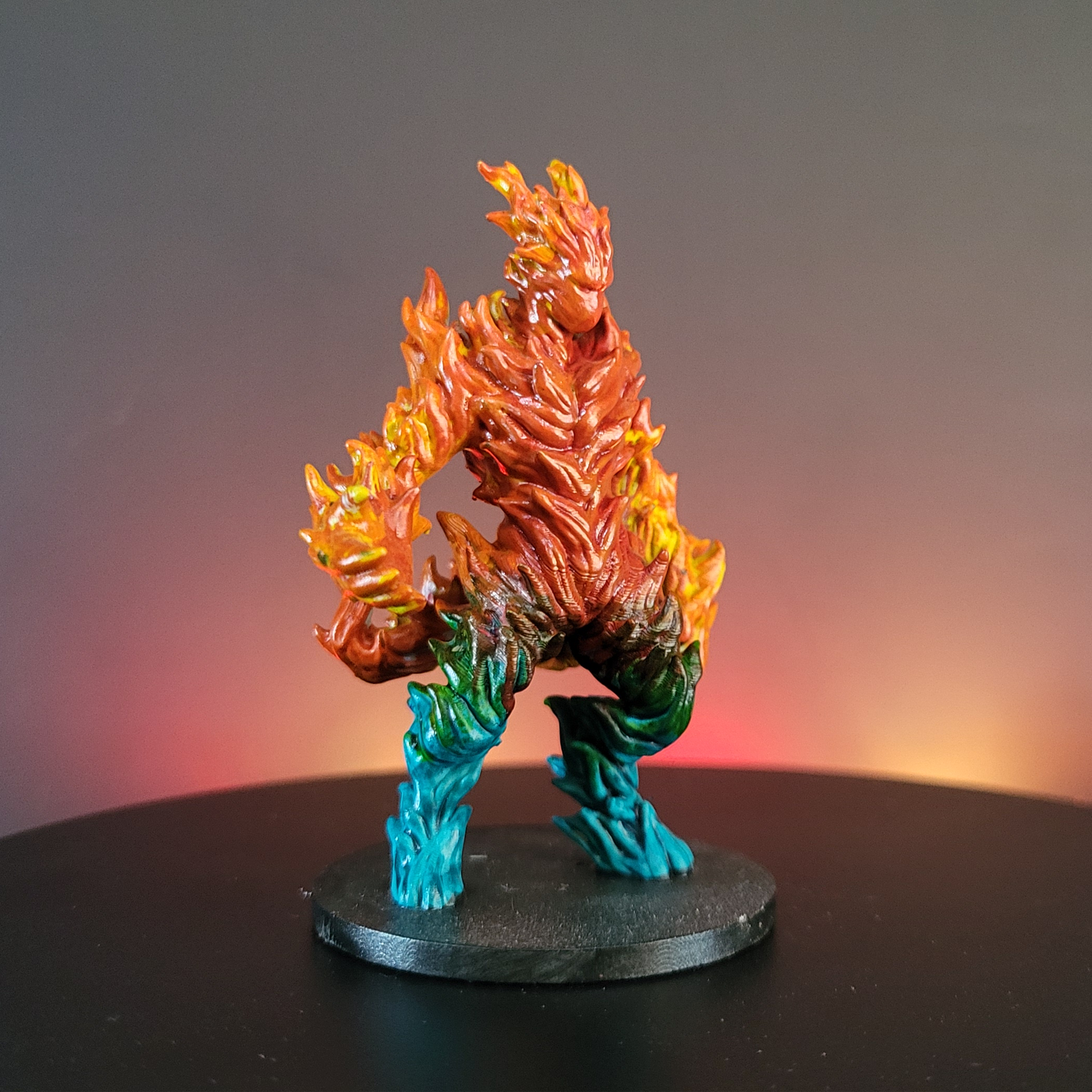
Candle Elemental
