You Don’t Have to Know What You’re Doing
Part 1: The Candle Elemental
Let’s start with something honest: my ability to envision an end product is about as effective as an unplugged monitor. It’s genuinely a good thing that I’m not afraid to fail, because otherwise I would never be able to paint.
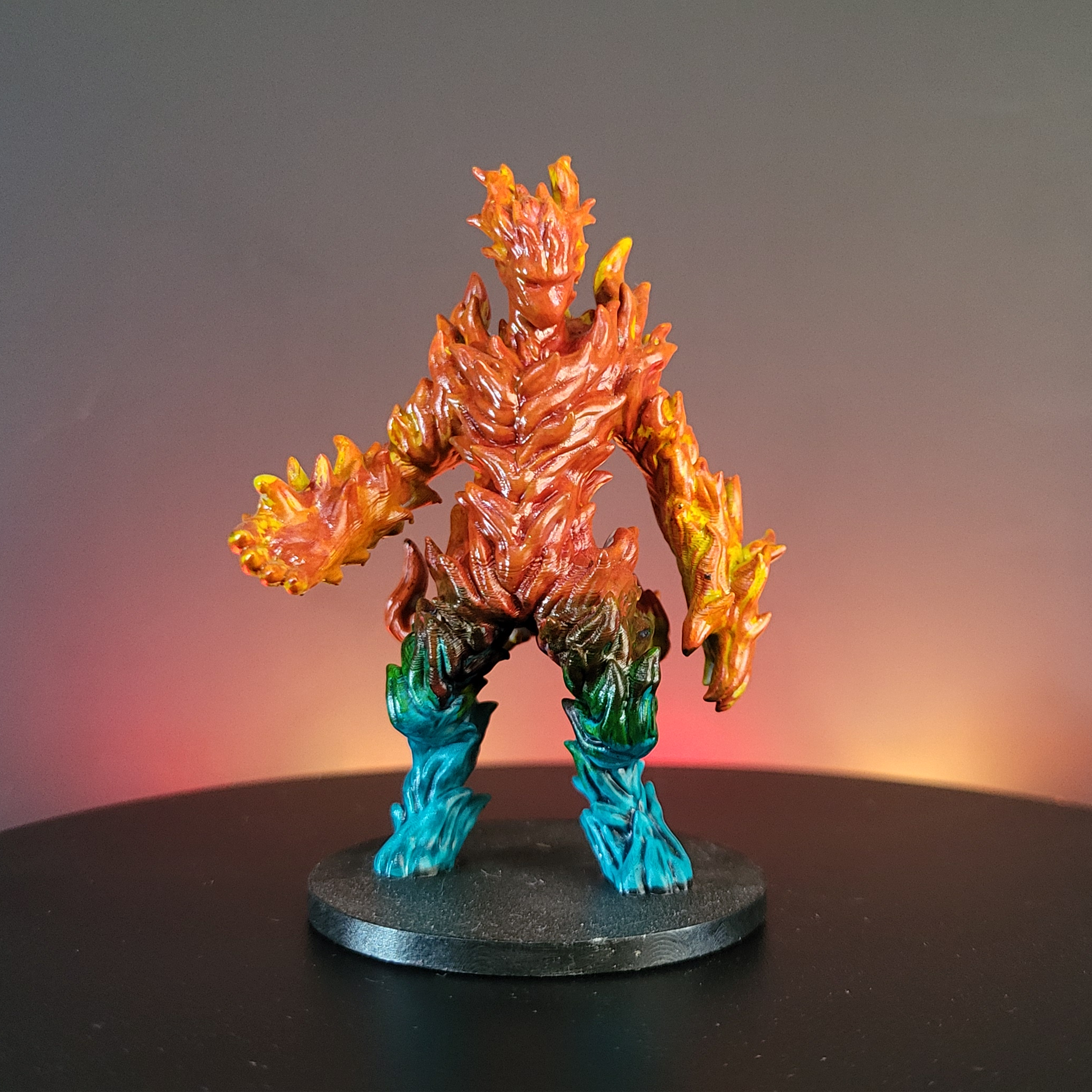
When I went to paint my first Fire Elemental, I had no idea where to start. So I chose the easiest reference I could think of—real fire. I pulled up an image of a candle flame and just went to town.
I tried it with slapchop over a pure white base coat. I had no idea what was going to work and what was going to fail, but that’s half the fun of learning something new.
When I finished, I was left with a miniature that I liked… but would never sell.
So I did what I usually do next: I asked people. Friends, family—what did they like, what didn’t work, what felt off? I loved the sculpt. I just needed a paint scheme that actually did it justice.
Keep in mind, this was coming from someone with no real ability to envision the end result, no formal knowledge of color theory, and who was still very new to painting. Unless you count the small army of about six Space Marines I painted a year earlier by following YouTube tutorials.
So I leaned on the only things I did have: my willingness to research and my willingness to fail.
I started digging into different paints, different techniques, and anything else I could get my hands on. For the record, there are some absolutely incredible miniature painting creators on YouTube.Z
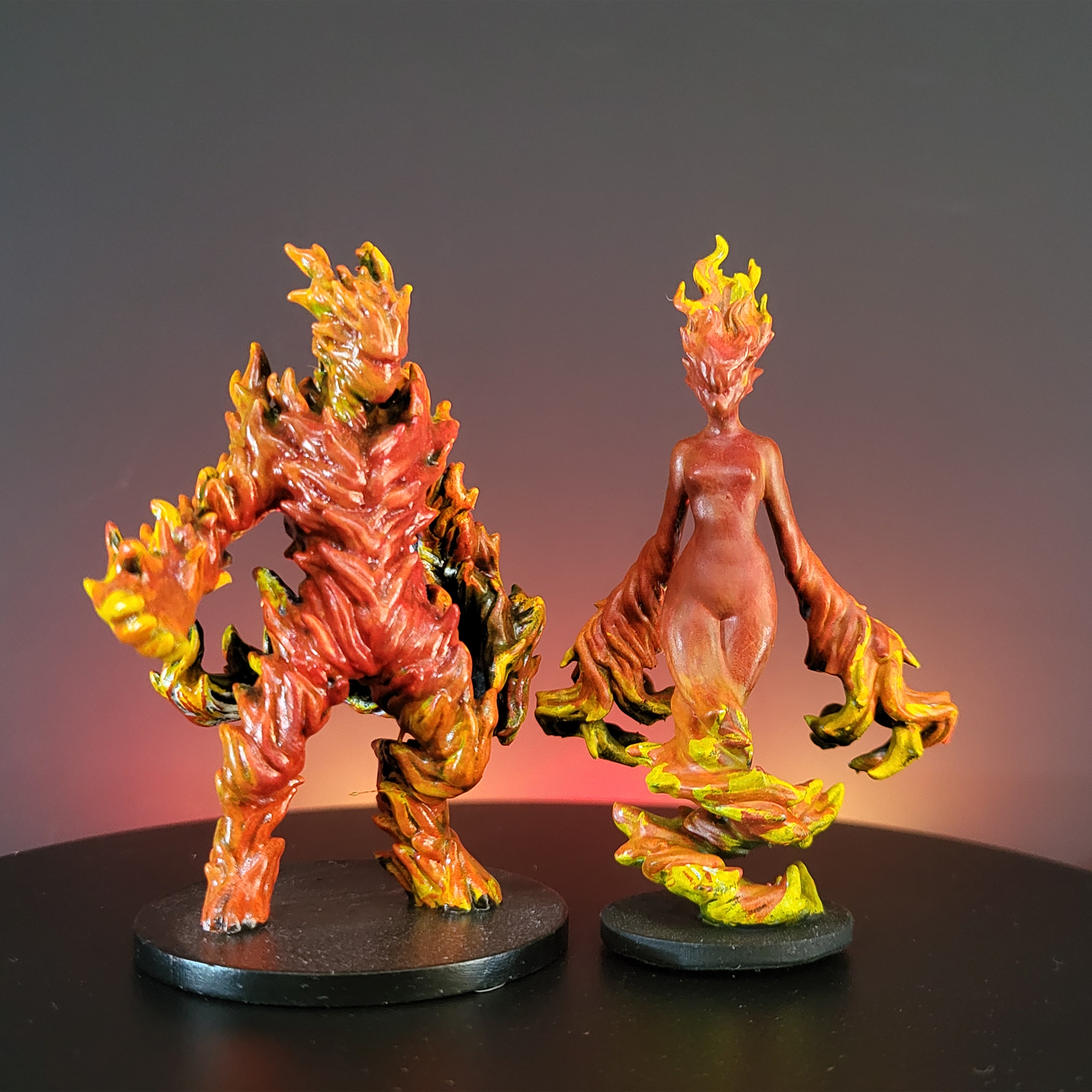
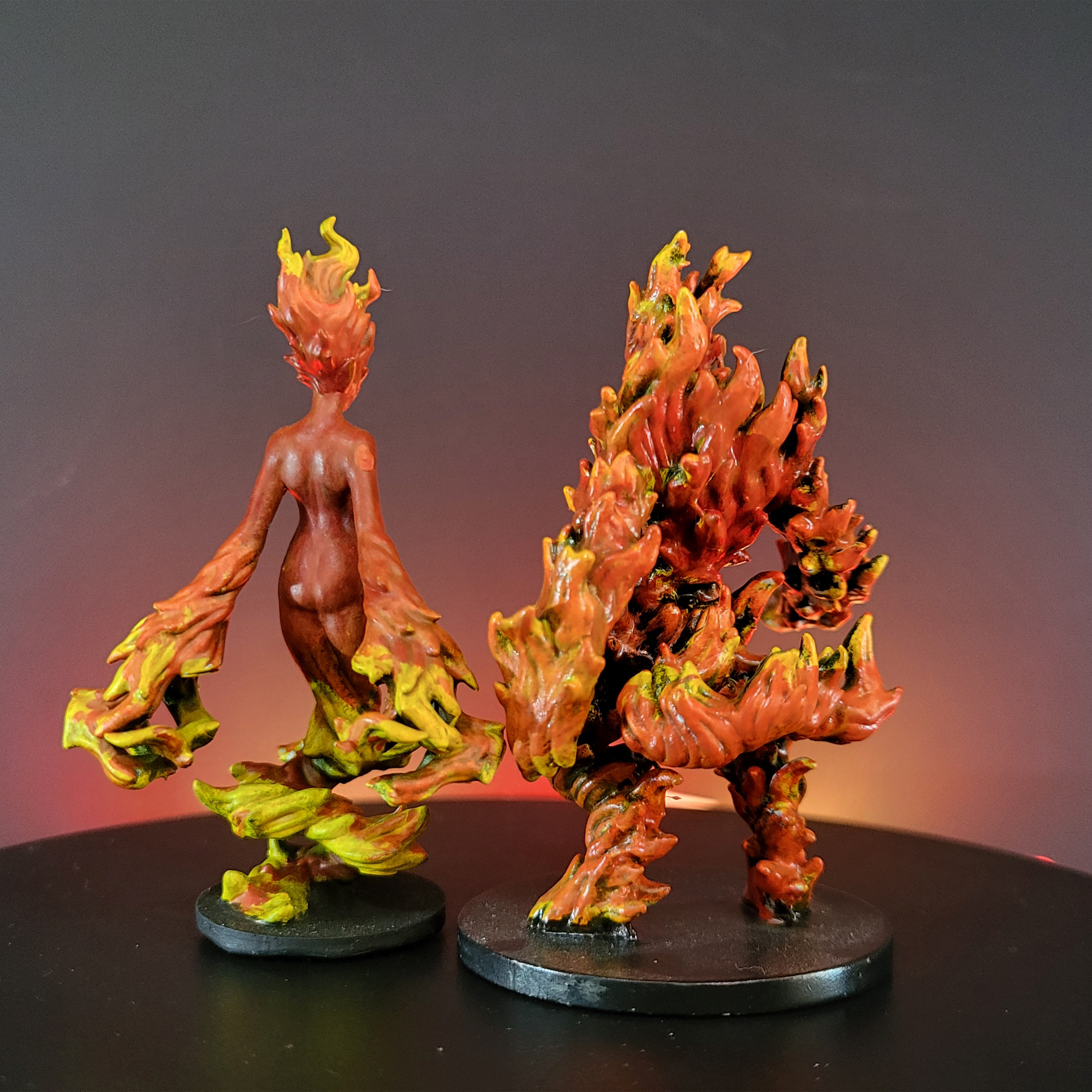
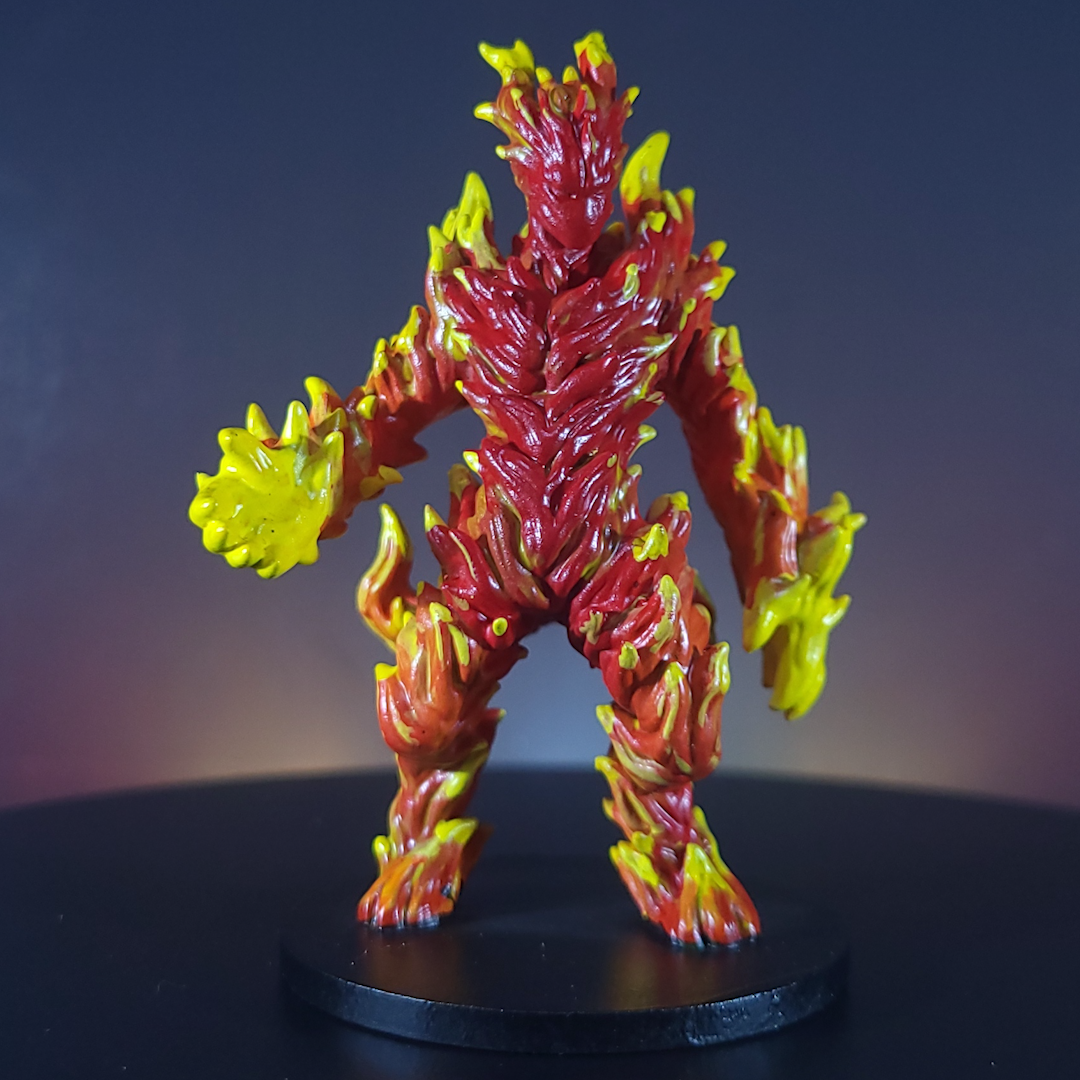
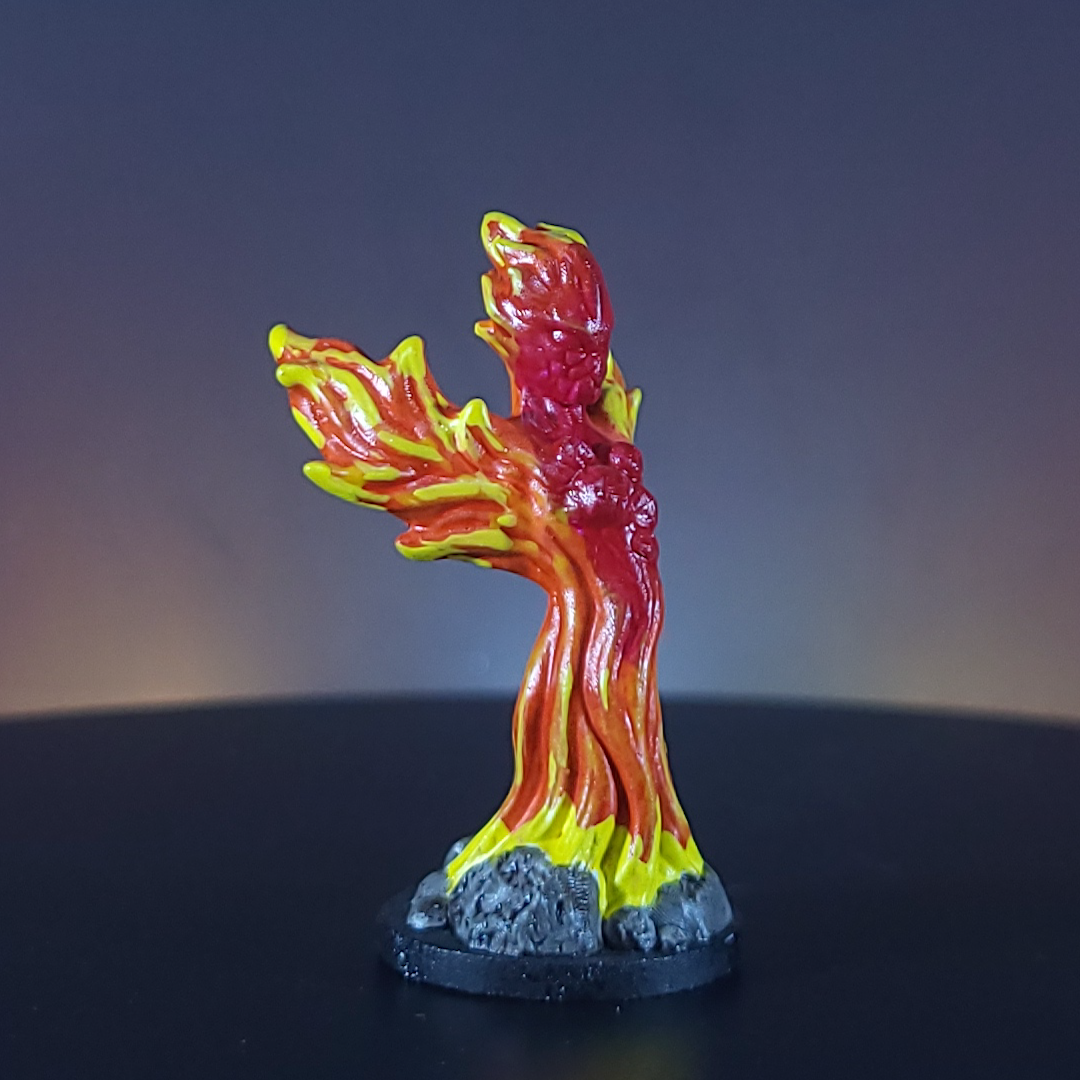
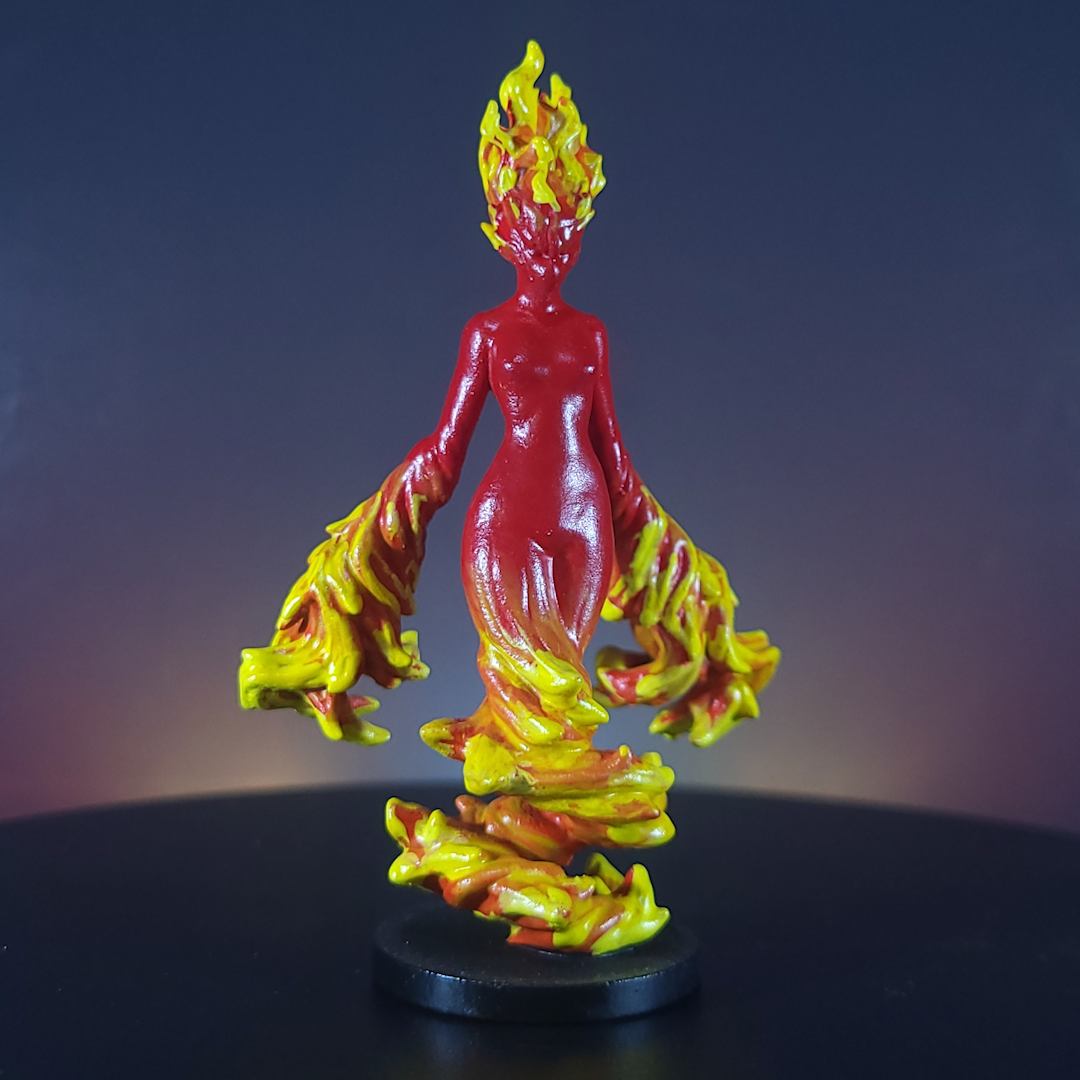
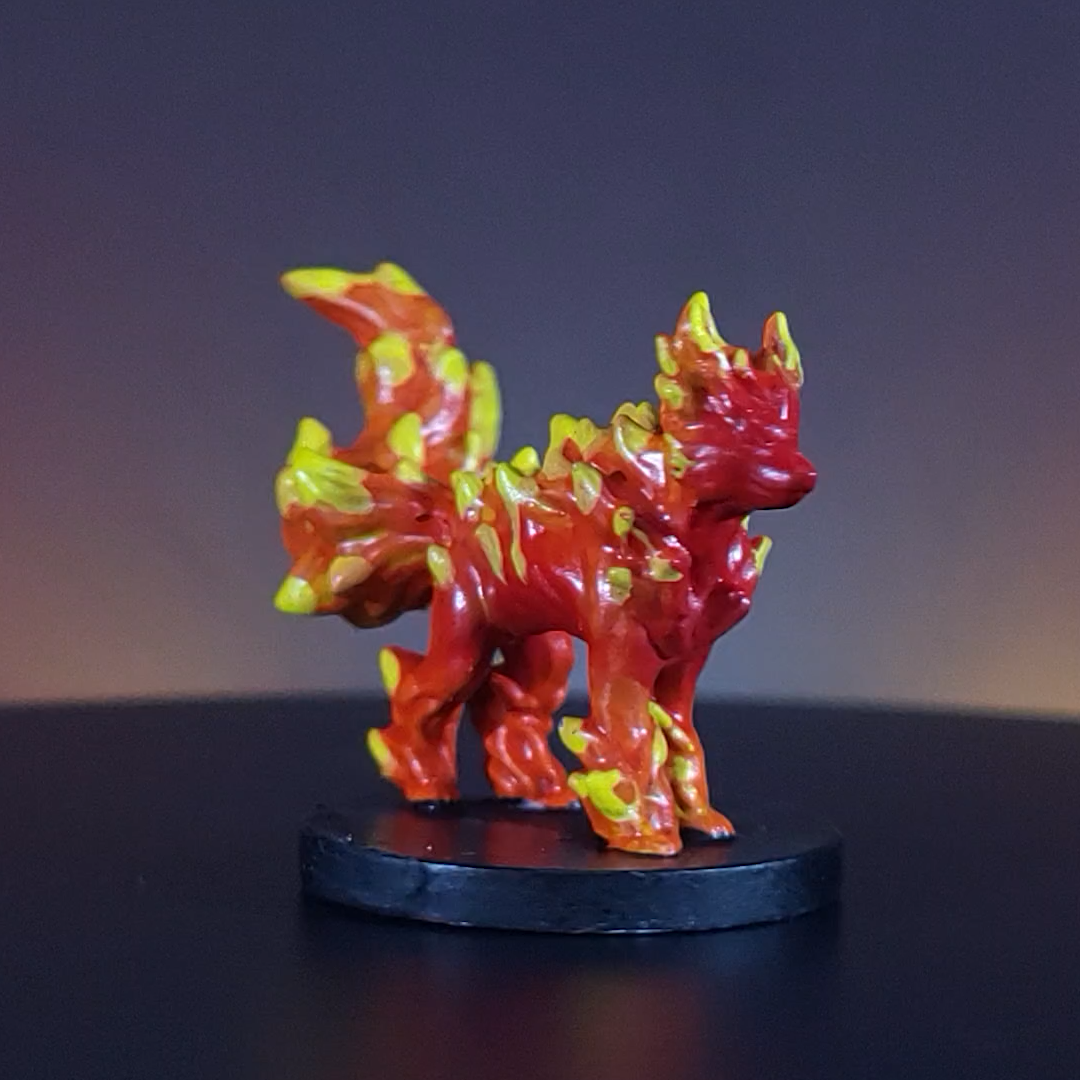
Within a couple of weeks, I had swapped my paints to a mix of traditional acrylics and contrast paints, completely abandoned slapchop, and redesigned the Fire Elemental scheme into a simple three-color approach with blending—even I could pull it off.
At one point we actually stepped back and re-examined the scheme. Technically speaking, the Fire Elemental is painted backwards if you’re thinking about real-world fire physics. A real flame burns hottest at the core and gets darker as it moves outward.
But we ultimately chose to keep the original design anyway.
Why? Because from three to five feet away—the distance people usually see a miniature on a tabletop—everyone instantly knows what it represents. The colors read clearly, the shape makes sense, and it looks like fire.
And at the end of the day, that matters more to us than perfect physics.
The lesson here is straightforward: be willing to try things that don’t work. Be willing to fail. Every attempt teaches you something, and every failure gets you one step closer to something better.